- Home
- Shanghai
PVG · SHA · Shanghai Municipality
Shanghai
China's biggest city splits along the Huangpu River: the treaty-port Bund and the old lanes on one bank, the skyline built since 1990 on the other. Three days covers both, and Metro Line 2 ties them together.
- Days needed
- 3 – 4
- Best months
- Mid Sep – Nov · Apr – May
- Airports
- PVG Pudong · SHA Hongqiao
- Rail hubs
- Shanghai Hongqiao · Shanghai

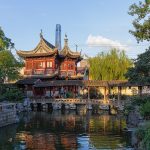
Shanghai is China’s biggest city, home to almost 25 million people at the last census, and for most visitors it is the easiest place in the country to start. It is also two cities facing each other across the Huangpu River. On the west bank, Puxi, is the Shanghai that grew after the 1842 Treaty of Nanking made it a treaty port: the stone banks of the Bund, the old walled town around Yu Garden, and the plane-tree streets of the former French Concession. On the east bank, Pudong, is the skyline, almost all of it built since the city was allowed to develop the area from 1990. This Shanghai travel guide covers both banks and how to move between them.
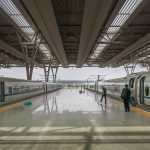
The practical side is unusually easy for China. The metro is enormous, foreign bank cards now work at its gates, and the bullet trains to Beijing, Suzhou and Hangzhou leave from a station joined to an airport terminal. What takes planning is the calendar: two closing days, a rainy June, a hot July and two national holiday weeks.
Checked 3 Oct 2026 Population (24,870,895, 2020 census) from the National Bureau of Statistics; history from Wikipedia’s Shanghai article.
How many days in Shanghai
Three days is the right amount for a first visit. Give the old city and the Bund a day, Pudong a day, and keep the third for the French Concession or a water town; the 3-day Shanghai itinerary puts it in order around the closing days (Yu Garden on Mondays, Shanghai Museum East on Tuesdays). A fourth day lets you do both third-day options, or add Disneyland. Everything worth your time, priced, is in things to do in Shanghai. Many visitors add Suzhou or Hangzhou: Suzhou works as a day trip, Hangzhou is better with a night.
Getting to Shanghai
Most international flights land at Pudong Airport (PVG), about 30 km from the centre, which handled almost 85 million passengers in 2025. The Maglev covers the first 30 km to Longyang Road in about eight minutes for ¥50 (¥40 with a same-day air ticket); Metro Line 2 goes all the way into town in about an hour for around ¥7. Hongqiao Airport (SHA), 13 km out, handles mostly domestic flights and shares a complex with Hongqiao railway station. Since December 2024 an Airport Link line has connected the two airports in about 40 minutes.
By train, Shanghai is 4 hours 24 minutes from Beijing on the fastest G trains, with second-class fares of ¥525–678 and around fifty trains a day; the Shanghai to Beijing train guide has the details. Suzhou is about half an hour away and Hangzhou from 42 minutes; see our Suzhou and Hangzhou train guides.
Checked 3 Oct 2026 Distances from the Shanghai government (Dec 2023); passenger numbers from Wikipedia; Maglev fares from The Paper (Apr 2024); Line 2 from China Highlights (Aug 2026); Airport Link from the Shanghai government (Dec 2024); train times and fares from Ctrip (4 Oct 2026 listing).
Getting around Shanghai
The metro does almost everything: 21 lines, 906 km and 523 stations at the end of 2025. Fares start at ¥3 and have not changed since 2005, although a public hearing in September 2026 discussed raising them by about ¥1 a trip. Since June 2025 you can tap a foreign Visa, Mastercard, Amex or JCB card at the gates, which removes the old struggle with ticket machines. Line 2 is the one to know: it links both airports, Hongqiao station, Jing’an, People’s Square, East Nanjing Road for the Bund, and Lujiazui. And for ¥2, the public ferry across the Huangpu is the best-value ride in the city.
Checked 3 Oct 2026 Network size from the Shanghai government (29 Dec 2025); fares and hearing from the Shanghai government (Aug 2026) and The Paper; contactless payment from China Daily (28 Jun 2025); ferry from the Shanghai government (Sep 2025).
Where to stay in Shanghai
For a first visit, stay on Line 2 between People’s Square and the Bund: you can walk to the river and ride to almost everything else without changing. People’s Square is the better value; East Nanjing Road and the Bund are closer and dearer. Jing’an is calmer and still central, and the former French Concession is the most pleasant to come home to, at the cost of slower metro links. Lujiazui has the views but makes you commute, and Hongqiao is only for an early train. The where to stay in Shanghai guide compares all six. Since May 2024, national rules say hotels may not turn away foreign guests for lacking a special licence.
Checked 3 Oct 2026 Area comparisons from the guides cited in our where-to-stay article; hotel rule from the Shanghai government (29 May 2024).
Best time to visit Shanghai
From mid-September to November. October is the driest month, with 7.5 rain days on average, the heat has gone, and the hairy crab season is on. April and May are next. June brings the plum rain (in 2026, from 18 June to 7 July), July and August average 33°C by day with typhoons on top, and winter is cold, damp and cheaper. Avoid National Day Golden Week, 1 to 7 October, and the Chinese New Year week, from 6 February in 2027. The month-by-month figures are in the best time to visit Shanghai.
Checked 3 Oct 2026 China Meteorological Administration normals 1991–2020 via Wikipedia; plum rain from The Paper and Guangming Daily (2026); holidays from Xinhua and chinatravel.com.
What a Shanghai trip costs
Shanghai’s best sights are cheap. The Bund, Nanjing Road and Shanghai Museum East are free, the ferry is ¥2, Yu Garden ¥30–40 depending on the season, and the Propaganda Poster Art Centre ¥25. The big ticket is a tower: ¥180 for the Shanghai Tower’s deck. Our three-day itinerary comes to about ¥277 in admissions per adult. Food can cost almost nothing: a bowl of scallion oil noodles is ¥7 in the right shop, four pan-fried buns ¥13, and the Shanghai food guide lists where. Hotels are the main cost: five-star rooms averaged ¥979 a night in 2025, and one cost-of-travel site puts the average visitor’s daily spend at about US$98, two-thirds of it on accommodation.
Checked 3 Oct 2026 Prices from the sources in our things-to-do and food guides; five-star rate from the Shanghai Municipal Administration of Culture and Tourism via Hotel-Online (Feb 2026); daily spend from BudgetYourTrip (accessed 3 Oct 2026).
Shanghai travel guide: quick answers
Is Shanghai worth visiting?
Yes, especially as a first stop. It is easy to arrive in, easy to get around, and the contrast between the Bund and Pudong is something no other Chinese city does quite as well. It is less about ancient monuments than Beijing or Xi’an, so pair it with Suzhou’s gardens or Hangzhou’s West Lake.
Can I visit Shanghai without a visa?
Quite possibly. Shanghai’s airports are entry points for China’s 240-hour visa-free transit, open to 55 nationalities with an onward ticket to a third country, and many passports also qualify for 30-day visa-free entry until 31 December 2026. Our guide to visa-free entry and 240-hour transit explains which applies to you.
Do I need cash in Shanghai?
Very little. Foreign cards work at metro gates and on the Maglev, and Alipay and WeChat Pay both accept foreign cards for everyday payments. Carry a small amount of cash for the odd stall that only takes local apps.
Can I do Suzhou or Hangzhou as a day trip?
Suzhou, yes: the train takes about half an hour, though two days buys the evening canal streets. Hangzhou is possible but rushed, and our Hangzhou verdict explains why a night there is better.
Checked 3 Oct 2026 Visa-free transit from the National Immigration Administration (Jun 2025) and the Beijing government (Dec 2024); 30-day entry from the Chinese consulate in Adelaide (Nov 2025); payments from the Shanghai government (Apr 2024, Jun 2025). The views on Suzhou and Hangzhou are from our own guides to each.
The guides below are ordered the way you would read them when planning: the route first, then the individual decisions.
The Shanghai line
Nine guides, in the order you'd read them
Every destination on this site is built to the same nine-guide shape, so you always know what exists and where to find it.
-

-
-

-

-

-
- Day Trips from Shanghai: Water Towns Compared
- Shanghai Airport to City: Maglev, Metro or Taxi
- Is Shanghai Worth Visiting?


Interchanges
Where the Shanghai line connects
-
Beijing
G-train
from 4 h 24 min -
Suzhou
G-train
from 25 min -
Hangzhou
G-train
from 42 min -
Harbin
G-train
from 12 h 12 min